
Retinal Vein Occlusion: Symptoms & Treatment
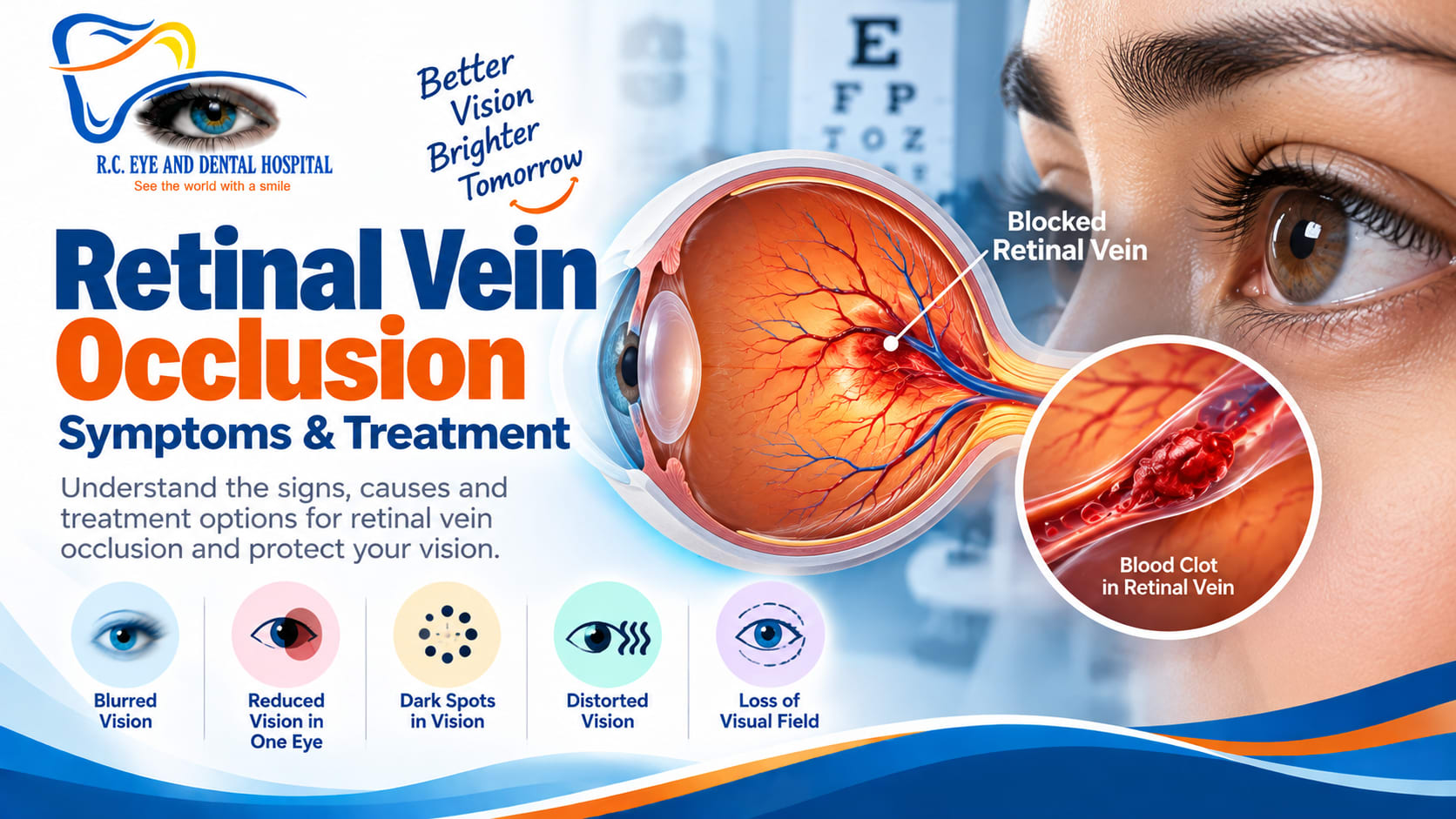
Retinal Vein Occlusion: Symptoms & Treatment
Dr. Rachit Agarwal
What Is Retinal Vein Occlusion?
Retinal Vein Occlusion (RVO) is an eye condition in which a vein carrying blood away from the retina becomes blocked. The retina is the light-sensitive tissue at the back of the eye that helps us see.
The blockage can cause bleeding or fluid leakage in the retina, potentially affecting vision. It may involve a major retinal vein or one of its smaller branches.
Common Symptoms of Retinal Vein Occlusion
Symptoms may develop suddenly or gradually, depending on the location and severity of the blockage.
Common symptoms include:
Sudden or blurred vision
Reduced vision in one eye
Dark or empty areas in the field of vision
Distorted vision
Difficulty seeing details clearly
Some people may have few noticeable symptoms initially. Sudden changes in vision require urgent eye evaluation.
What Causes Retinal Vein Occlusion?
Retinal vein occlusion is often associated with conditions that affect blood vessels and circulation.
Risk factors may include:
High blood pressure
Diabetes
High cholesterol
Increasing age
Glaucoma
Smoking
Having these risk factors does not necessarily mean a person will develop the condition, but managing them can support overall vascular and eye health.
How Is Retinal Vein Occlusion Treated?
Treatment depends on the location of the blockage, the extent of retinal damage and whether complications have developed.
An eye specialist may recommend:
Anti-VEGF injections: These may help reduce retinal swelling and protect vision in suitable cases.
Steroid treatment: Certain patients may benefit from steroid injections or implants.
Laser treatment: May be considered for specific complications, depending on the clinical findings.
Monitoring: Regular retinal examinations and imaging help assess changes and guide treatment.
Treatment may help preserve or improve vision, but the outcome varies from person to person.
When Should You See an Eye Specialist?
If you experience sudden blurred vision or sudden vision loss in one eye, seek urgent medical attention. Do not wait for the symptoms to improve on their own.
Regular eye examinations are also important for people with diabetes, high blood pressure or other vascular risk factors.
Retina Care at R.C. Eye & Dental Hospital, Bijnor
At R.C. Eye & Dental Hospital, Bijnor, patients can seek professional evaluation for blurred vision and other retinal concerns.
Early assessment can help identify retinal problems, guide appropriate treatment and support better vision outcomes.
Need Expert Consultation?
Our specialists are here to help you with any eye or dental concern.