
Optic Neuritis: Causes, Symptoms & Treatment
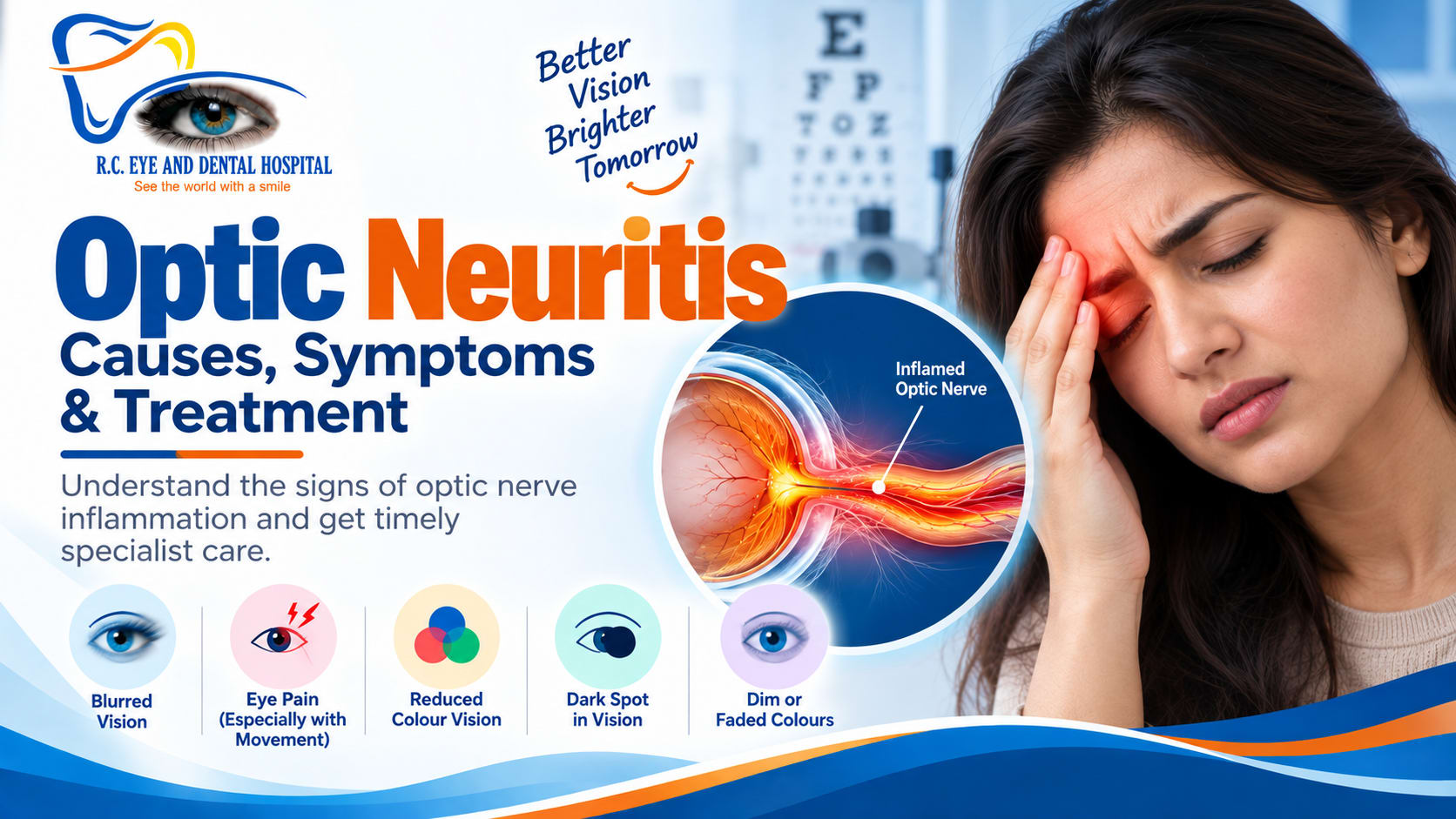
Optic Neuritis: Causes, Symptoms & Treatment
Dr. Rachit Agarwal
5 October 2026
What Is Optic Neuritis?
Optic neuritis is inflammation of the optic nerve, which carries visual information from the eye to the brain. The condition can affect one or, less commonly, both eyes.
It may develop suddenly and can cause changes in vision. Pain around or behind the eye, particularly during eye movement, is also a common symptom.
Common Symptoms of Optic Neuritis
Symptoms can vary from person to person but may include:
- Blurred or reduced vision
- Pain that becomes worse with eye movement
- Reduced colour vision
- A dim or faded appearance of colours
- A blind or dark spot in the centre of vision
- Reduced vision developing over hours or days
Sudden changes in vision should always be evaluated by an eye specialist.
What Causes Optic Neuritis?
Optic neuritis can have different causes. In some people, an underlying cause may not be immediately identified.
Possible associations include:
- Certain inflammatory or autoimmune conditions
- Some infections
- Other disorders affecting the nervous system
- Certain medications or toxins
Because the causes can vary, proper medical evaluation is important.
How Is Optic Neuritis Diagnosed?
An eye specialist may perform a detailed eye and vision examination. Depending on the symptoms and clinical findings, additional tests may be recommended.
These may include visual assessment, colour-vision testing, examination of the optic nerve and, when appropriate, imaging or other investigations.
How Is Optic Neuritis Treated?
Treatment depends on the underlying cause and severity of the condition.
In some cases, optic neuritis may improve gradually without specific treatment. When treatment is required, a doctor may recommend medicines such as corticosteroids or treatment directed at an underlying condition.
It is important not to self-medicate, especially with steroid medicines or eye drops.
When Should You See an Eye Specialist?
You should seek prompt medical evaluation if you experience:
- Sudden or unexplained vision loss
- New blurred or dim vision
- Pain with eye movement
- Reduced colour vision
- A new dark or blind spot in your vision
Sudden significant vision changes require urgent medical assessment.
Eye Care at R.C. Eye & Dental Hospital, Bijnor
At R.C. Eye & Dental Hospital, Bijnor, patients can seek professional evaluation for vision changes, eye pain and other eye-related concerns.
Do not ignore sudden changes in vision. Timely examination can help identify the underlying cause and guide appropriate management.
Need Expert Consultation?
Our specialists are here to help you with any eye or dental concern.