
Glaucoma: The Silent Eye Disease You Should Know About
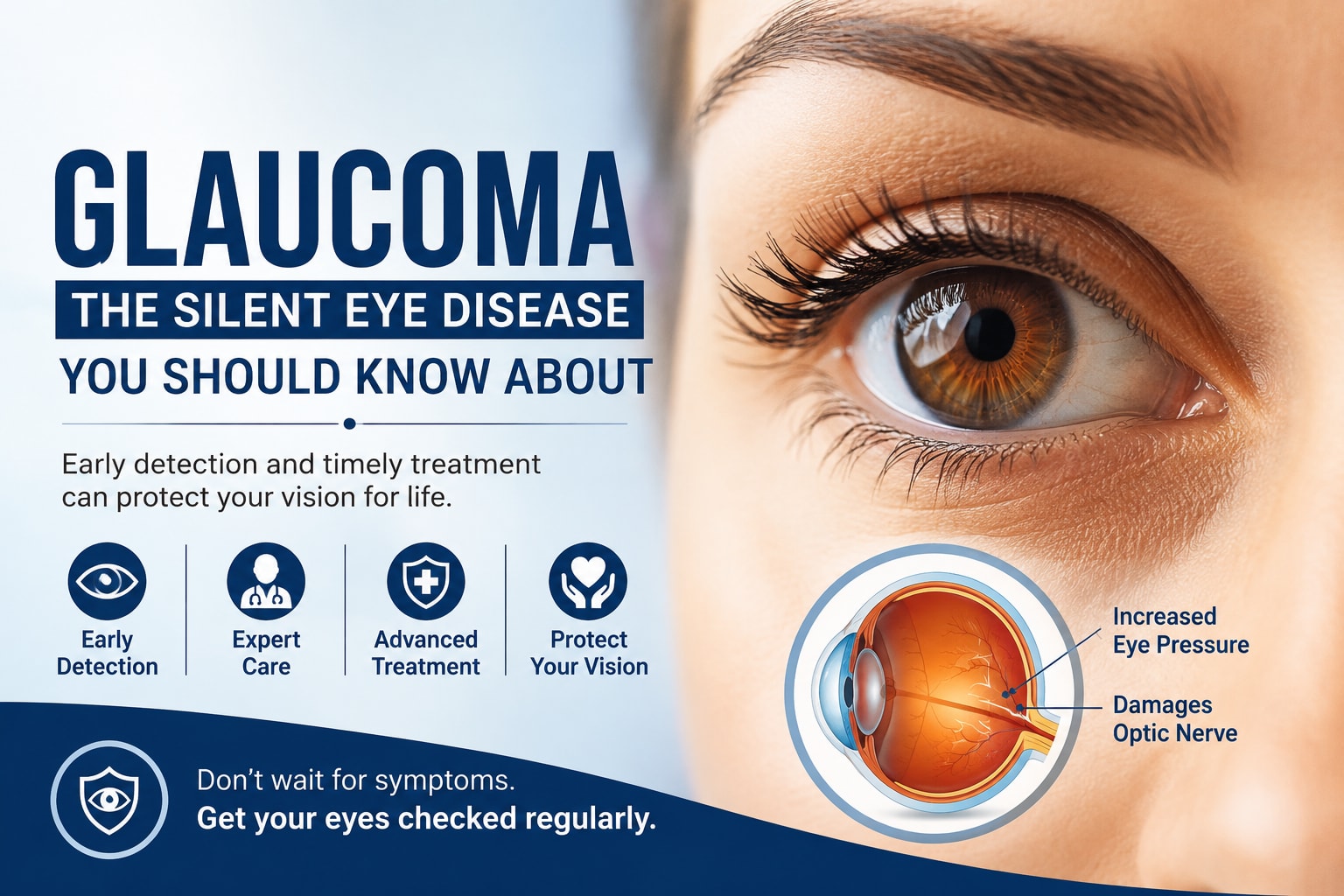
Glaucoma is one of the most serious eye conditions that can gradually damage the optic nerve and lead to permanent vision loss. What makes glaucoma particularly concerning is that it often develops slowly without noticeable symptoms in its early stages. By the time a person experiences significant changes in vision, considerable damage may already have occurred.
The good news is that early detection, regular eye examinations, and timely treatment can help protect your vision. Understanding glaucoma and knowing its warning signs can help you take the right steps toward maintaining healthy eyesight.
What Is Glaucoma?
Glaucoma is a group of eye diseases that damage the optic nerve, the part of the eye responsible for transmitting visual information to the brain.
In many cases, glaucoma is associated with increased pressure inside the eye, known as intraocular pressure (IOP). However, glaucoma can also occur even when eye pressure is within the normal range.
If glaucoma is not detected and treated appropriately, progressive damage to the optic nerve can cause loss of peripheral vision and eventually affect central vision.
Unlike some temporary eye problems, vision loss caused by glaucoma is generally permanent. This is why early diagnosis and appropriate treatment are extremely important.
Why Is Glaucoma Called the "Silent Eye Disease"?
Glaucoma is often called the silent eye disease because the most common form, open-angle glaucoma, may cause little or no noticeable symptoms during its early stages.
A person may continue performing their daily activities normally while the disease gradually affects their peripheral vision.
As the condition progresses, the visual field can become increasingly restricted. In advanced cases, glaucoma can seriously impair vision.
Regular comprehensive eye examinations are therefore important, especially for people who have risk factors for glaucoma.
Common Types of Glaucoma
Glaucoma can occur in different forms. Some of the most common types include:
1. Open-Angle Glaucoma
Open-angle glaucoma is one of the most common forms. The drainage angle of the eye remains open, but fluid does not drain as efficiently as it should. This can gradually increase pressure and damage the optic nerve.
The condition usually progresses slowly and may not cause noticeable symptoms initially.
2. Angle-Closure Glaucoma
Angle-closure glaucoma occurs when the drainage angle becomes blocked or closes. In some cases, this can cause a sudden increase in eye pressure.
Acute angle-closure glaucoma can be a medical emergency. Severe eye pain, sudden blurred vision, headache, nausea, vomiting, and seeing halos around lights may occur.
Anyone experiencing sudden and severe eye symptoms should seek immediate medical attention.
3. Normal-Tension Glaucoma
In normal-tension glaucoma, optic nerve damage can occur even when eye pressure is within the normal range.
This demonstrates why measuring eye pressure alone is not enough to completely evaluate glaucoma risk. A comprehensive eye examination may be required.
4. Childhood or Congenital Glaucoma
Glaucoma can occasionally occur in infants and children. Symptoms may include excessive watering, sensitivity to light, unusually large eyes, or cloudy-looking eyes.
Early evaluation by an eye specialist is important when glaucoma is suspected in children.
Symptoms of Glaucoma
Early glaucoma may not cause obvious symptoms. However, as the disease progresses, some people may experience:
- Gradual loss of peripheral vision
- Difficulty seeing objects from the sides
- Blurred vision
- Difficulty adjusting to changes in lighting
- Seeing halos around lights
- Eye pain or redness in certain types of glaucoma
- Headache associated with sudden increases in eye pressure
- Sudden vision changes in acute cases
It is important to remember that many people with glaucoma do not notice symptoms in the early stages. Waiting for symptoms before getting an eye examination may allow the disease to progress unnoticed.
What Causes Glaucoma?
Glaucoma can develop due to several factors. Increased eye pressure is an important risk factor, but it is not the only one.
Factors that may increase the risk of glaucoma include:
- Increasing age
- Family history of glaucoma
- High eye pressure
- Diabetes
- Certain medical conditions
- Previous eye injuries
- Long-term use of certain steroid medications
- Certain structural characteristics of the eye
Having one or more risk factors does not necessarily mean that a person will develop glaucoma. However, people at higher risk may benefit from regular comprehensive eye examinations.
How Is Glaucoma Diagnosed?
A comprehensive eye examination is essential for detecting glaucoma. An eye specialist may perform several tests depending on the patient's condition and risk factors.
Eye Pressure Measurement
Tonometry is used to measure the pressure inside the eye. Although elevated eye pressure can be an important risk factor, normal eye pressure does not completely rule out glaucoma.
Optic Nerve Examination
The eye specialist examines the optic nerve for signs of damage or changes that may be associated with glaucoma.
Visual Field Test
A visual field test evaluates the patient's peripheral and central vision. It can help identify areas of vision loss that may not be noticeable during everyday activities.
OCT and Retinal Imaging
Advanced imaging technologies such as Optical Coherence Tomography (OCT) can help assess the optic nerve and retinal structures in detail.
These tests can be particularly useful for detecting and monitoring structural changes over time.
Glaucoma Treatment Options
The goal of glaucoma treatment is generally to protect the remaining vision and prevent or slow further optic nerve damage.
Treatment depends on the type and severity of glaucoma and may include:
Eye Drops
Prescription eye drops are commonly used to reduce eye pressure or improve the drainage of fluid from the eye.
Patients should use glaucoma medications exactly as prescribed and should not stop treatment without consulting their eye specialist.
Laser Treatment
Certain types of glaucoma may be treated using laser procedures. Laser treatment can help improve fluid drainage or reduce the production of fluid inside the eye, depending on the specific condition.
Glaucoma Surgery
When medications or laser treatment are not sufficient, surgical procedures may be considered. The appropriate procedure depends on the type and severity of glaucoma and the patient's individual eye condition.
Can Glaucoma Be Prevented?
There is no guaranteed way to prevent every case of glaucoma. However, regular eye examinations can significantly improve the chances of detecting the disease at an early stage.
People with a family history of glaucoma or other risk factors should discuss an appropriate eye-screening schedule with an eye specialist.
Maintaining overall health, managing conditions such as diabetes, following prescribed treatment, and protecting the eyes from injuries can also contribute to better eye health.
When Should You Visit an Eye Specialist?
You should consider a comprehensive eye examination if you:
- Have a family history of glaucoma
- Are experiencing changes in vision
- Have persistent eye discomfort
- Have diabetes or other relevant health conditions
- Have previously been diagnosed with high eye pressure
- Use steroid medications for a prolonged period
- Are experiencing sudden severe eye pain or vision changes
For sudden severe eye pain, significant vision loss, or other acute eye symptoms, seek urgent medical evaluation.
Why Regular Eye Check-Ups Matter
One of the most effective ways to identify glaucoma early is through regular comprehensive eye examinations.
Because glaucoma can progress without obvious symptoms, an eye check-up can detect changes before a person notices significant vision problems.
Early diagnosis allows an eye specialist to assess the condition and recommend appropriate monitoring or treatment.
If you are looking for an Eye Specialist in Bijnor or need a comprehensive eye examination, consulting an experienced eye-care team can help you understand your eye health and identify potential problems at an early stage.
Glaucoma Treatment in Bijnor
If you are concerned about glaucoma or have noticed changes in your vision, timely evaluation is important. R.C. Eye & Dental Hospital, Bijnor provides comprehensive eye-care services and diagnostic evaluation for various eye conditions.
Whether you need a routine eye examination, glaucoma evaluation, or specialist consultation, getting your eyes checked at the right time can play an important role in protecting your vision.
Protect Your Vision — Don't Wait for Symptoms
Glaucoma may develop silently, but its impact on vision can be permanent. Regular eye examinations, early diagnosis, and appropriate treatment can help protect your remaining vision and reduce the risk of serious visual impairment.
If you have risk factors for glaucoma or are experiencing changes in your vision, consult an eye specialist in Bijnor for a comprehensive evaluation.
Your vision is precious. Don't wait until you notice a problem — get your eyes checked regularly.
Need Expert Consultation?
Our specialists are here to help you with any eye or dental concern.