
Eye Care 9 min read
Dry Eye Treatment in Bijnor: Causes, Symptoms & Prevention
Dr. Rachit Agarwal
21 August 2026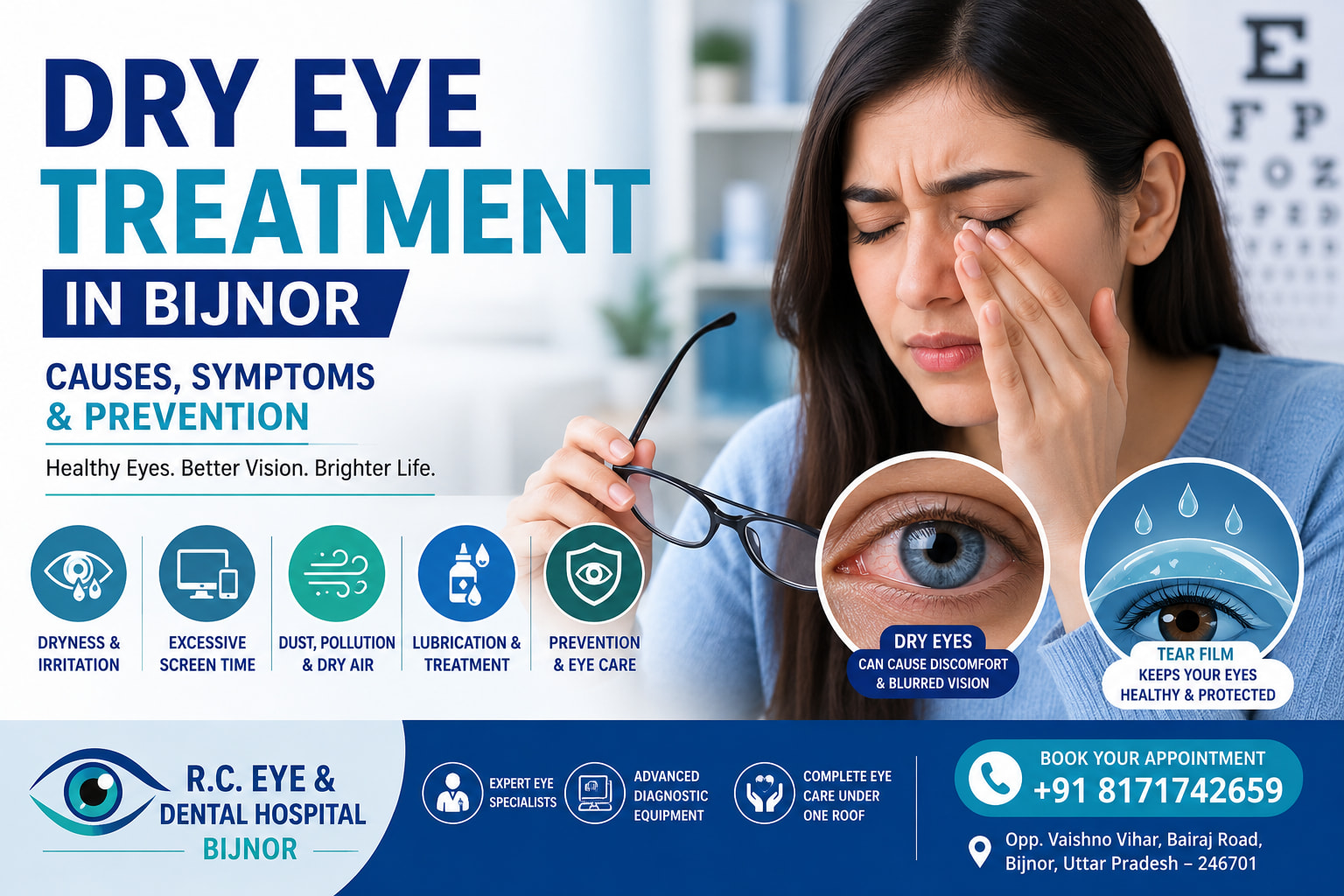
Dry, irritated or uncomfortable eyes are becoming increasingly common, especially among people who spend long hours looking at smartphones, computers and other digital screens. However, dry eyes are not always caused by screen time. Age, environmental conditions, certain medications and other eye-related factors can also contribute to the problem.
Dry eye occurs when the eyes do not produce enough tears or when tears evaporate too quickly. This can result in burning, irritation, redness, watering, blurred vision and a feeling that something is stuck in the eye.
If these symptoms occur frequently or interfere with your daily activities, it is important to get your eyes examined rather than relying only on home remedies.
If you are searching for dry eye treatment in Bijnor, a comprehensive eye examination can help identify the underlying cause and determine the appropriate treatment.
---
What Is Dry Eye?
Dry eye is a common eye condition in which the eyes do not have adequate lubrication and moisture.
A healthy tear film helps keep the surface of the eye smooth, comfortable and protected. When the quantity or quality of tears is not sufficient, the surface of the eye may become irritated.
Dry eye symptoms can be temporary, such as after prolonged screen use, or they can become persistent and require professional evaluation.
---
Common Symptoms of Dry Eye
Dry eye symptoms can vary from person to person. Common symptoms include:
Burning or stinging sensation
Dryness or irritation
Red or tired-looking eyes
Feeling of something stuck in the eye
Excessive watering
Blurred or fluctuating vision
Sensitivity to light
Difficulty wearing contact lenses
Eye fatigue
Discomfort after prolonged screen use
Interestingly, watery eyes can also be a symptom of dry eye. When the eye becomes irritated, it may produce reflex tears that do not provide the same long-lasting lubrication as a healthy tear film.
If symptoms continue or become frequent, an eye examination is recommended.
---
What Causes Dry Eyes?
Dry eye can develop due to several factors.
1. Prolonged Screen Time
Spending long periods on smartphones, laptops and computers can reduce the frequency of blinking. Reduced blinking may allow tears to evaporate more quickly.
If your daily routine involves extensive screen use, you may also find our guide on protecting your eyes in the digital age useful.
2. Age-Related Changes
Tear production and tear quality can change with age, increasing the likelihood of dry eye symptoms.
3. Air Conditioning and Fans
Constant exposure to air conditioners, coolers or fans can increase tear evaporation and make the eyes feel dry.
4. Dust and Pollution
Environmental factors such as dust, smoke and air pollution can irritate the surface of the eyes and contribute to discomfort.
5. Contact Lens Use
Some contact lens users may experience dryness, particularly when lenses are worn for long periods or when the eyes are already prone to dryness.
6. Certain Medications
Some medicines can contribute to dry eye symptoms. If you suspect that a medication is affecting your eyes, do not stop taking it without consulting the doctor who prescribed it.
7. Other Eye or Health Conditions
Dry eye symptoms can sometimes be associated with other eye or systemic conditions. This is why persistent symptoms should be evaluated by an eye specialist.
---
Why Does Screen Time Cause Dry Eyes?
When we concentrate on a screen, we tend to blink less frequently. Blinking is important because it spreads the tear film across the surface of the eye.
Long periods of uninterrupted screen use can therefore contribute to:
Dryness
Burning
Eye fatigue
Blurred vision
Irritation
Headaches or discomfort around the eyes
This is commonly associated with digital eye strain, which is already covered in detail in the hospital's existing eye-health content.
---
Simple Tips to Reduce Dry Eye Symptoms
If your symptoms are mild and occasional, some everyday habits may help reduce discomfort.
Follow the 20-20-20 Rule
When using a digital screen for extended periods, every 20 minutes, look at something approximately 20 feet away for around 20 seconds.
Blink More Frequently
Make a conscious effort to blink regularly while working on a computer or using a smartphone.
Take Regular Screen Breaks
Avoid continuously staring at a screen for several hours. Short breaks can give your eyes an opportunity to relax.
Keep Screens at a Comfortable Distance
Position your computer or screen at a comfortable distance and avoid holding your phone unnecessarily close to your face.
Avoid Direct Airflow
Try not to sit directly in front of an air conditioner, cooler or fan for prolonged periods.
Stay Hydrated
Adequate fluid intake supports normal body functions and can be part of a healthy routine for overall eye comfort.
Avoid Rubbing Your Eyes
Rubbing irritated eyes can worsen discomfort and may introduce additional irritation or infection-causing organisms.
---
How Is Dry Eye Diagnosed?
If dry eye symptoms persist, an eye specialist may perform a detailed eye examination.
Depending on your symptoms, the evaluation may include assessment of:
Tear production
Tear film quality
Tear evaporation
Eye surface
Eyelids and blinking pattern
General eye health
The exact tests required depend on your symptoms and clinical examination.
A proper diagnosis is important because dryness can sometimes be a symptom of another eye condition, rather than a standalone problem.
---
Dry Eye Treatment Options
Treatment depends on the underlying cause and severity of the condition.
Artificial Tears
Lubricating eye drops may be recommended to relieve dryness and improve eye comfort.
The appropriate eye drop depends on the individual's condition, so it is better to use eye medication according to professional advice rather than choosing prescription drops independently.
Managing the Underlying Cause
If dry eye is associated with prolonged screen use, environmental exposure, contact lenses or another contributing factor, addressing that factor may help reduce symptoms.
Treatment for Persistent Dry Eye
People with frequent or severe symptoms may require a more detailed evaluation and a personalized treatment plan.
Your eye specialist may recommend specific medications, lubricating treatments or other interventions depending on the findings.
---
When Should You Visit an Eye Specialist?
Occasional dryness after a long day in front of a screen may not be a serious concern. However, you should consider an eye examination if you experience:
Persistent eye dryness
Frequent burning or irritation
Recurrent redness
Persistent blurred vision
Light sensitivity
Difficulty wearing contact lenses
Eye pain
Symptoms that keep returning
Changes in vision
You can explore the eye specialists at R.C. Eye & Dental Hospital to learn more about the hospital's eye-care team.
---
Dry Eye Care at R.C. Eye & Dental Hospital, Bijnor
Choosing the right eye-care provider is important when eye symptoms persist.
R.C. Eye & Dental Hospital, Bijnor provides comprehensive eye care using modern diagnostic technology and experienced specialists. The hospital offers services covering cataract surgery, laser eye treatment, retina care, glaucoma management, corneal conditions and pediatric eye care.
The hospital's eye-care team includes Dr. Rachit Agarwal, Senior Eye Surgeon and Cornea & Refractive Surgery Specialist. His profile lists MBBS, MS Ophthalmology and a fellowship in Cornea & Refractive Surgery, along with more than 10 years of experience, 10,000+ surgeries and 500+ transplants.
For patients experiencing persistent dryness, irritation or other changes in vision, a proper eye examination can help identify the cause and determine the appropriate course of treatment.
---
Can Dry Eyes Affect Vision?
Yes. Significant or persistent dryness can sometimes cause temporary blurred or fluctuating vision because the tear film plays an important role in maintaining a smooth optical surface.
However, blurred vision can have many different causes. If vision changes are persistent, sudden or worsening, it is important to have your eyes examined rather than assuming that dry eye is the only cause.
---
Can Dry Eye Be Prevented?
Not every case of dry eye can be prevented, but certain habits may help reduce the risk or severity of symptoms.
You can:
Take regular breaks from screens
Blink frequently
Avoid direct airflow to the eyes
Maintain good hydration
Protect your eyes from dust and excessive environmental exposure
Follow proper contact-lens hygiene
Avoid rubbing your eyes
Have regular eye check-ups when recommended
If you spend several hours every day using a computer or smartphone, maintaining healthy screen habits is particularly important.
---
Dry Eye vs Digital Eye Strain
Dry eye and digital eye strain can have overlapping symptoms, including:
Burning
Dryness
Eye fatigue
Blurred vision
Irritation
Difficulty focusing
However, they are not necessarily the same condition.
Digital eye strain refers to a collection of symptoms associated with prolonged visual tasks, particularly screen use. Dry eye is related to inadequate lubrication of the eye surface.
A person can experience one or both conditions, which is why persistent symptoms should be evaluated properly.
---
Frequently Asked Questions About Dry Eye
1. What is the main cause of dry eyes?
There is no single cause. Screen use, reduced blinking, ageing, environmental conditions, contact lenses, certain medicines and other eye or health conditions can contribute to dry eye.
2. Can mobile phones cause dry eyes?
Prolonged smartphone use can contribute to dry eye symptoms because people tend to blink less while concentrating on screens.
3. Can dry eyes cause watery eyes?
Yes. Irritation caused by dryness can trigger reflex tearing, resulting in excessive watering.
4. Is dry eye a permanent condition?
Not necessarily. Some cases are temporary and improve after addressing the contributing factor, while chronic dry eye may require ongoing management.
5. Can I use eye drops for dry eyes?
Lubricating eye drops may help some people, but the appropriate product depends on the cause and severity of symptoms. For persistent symptoms, consult an eye specialist before relying on long-term self-treatment.
6. When should I consult an eye specialist?
Consult an eye specialist if dryness is persistent, recurrent, painful, associated with significant redness, light sensitivity or vision changes.
7. Where can I get dry eye treatment in Bijnor?
If you are looking for dry eye treatment in Bijnor, you can consult the eye-care team at R.C. Eye & Dental Hospital for an appropriate eye examination and treatment guidance.
---
Don't Ignore Persistent Eye Discomfort
Dry eyes may initially seem like a minor problem, especially after a long day of screen use. However, persistent dryness, irritation, redness or changes in vision should not be ignored.
Simple habits such as taking screen breaks, blinking regularly and avoiding direct airflow may help reduce occasional symptoms. If the problem continues, a professional eye examination can help identify the underlying cause.
If you are experiencing persistent dry eye symptoms and looking for dry eye treatment in Bijnor, consult an eye specialist for appropriate evaluation and personalized guidance.
Book Your Eye Consultation
R.C. Eye & Dental Hospital, Bijnor
Opp. Vaishno Vihar, Bairaj Road, Bijnor, Uttar Pradesh – 246701
For Appointment & Consultation:
+91 8171742659
Book your consultation and take the right step towards healthier, more comfortable eyes.
---
Need Expert Consultation?
Our specialists are here to help you with any eye or dental concern.