
Dental Cavities Treatment in Bijnor: Causes, Symptoms & Prevention
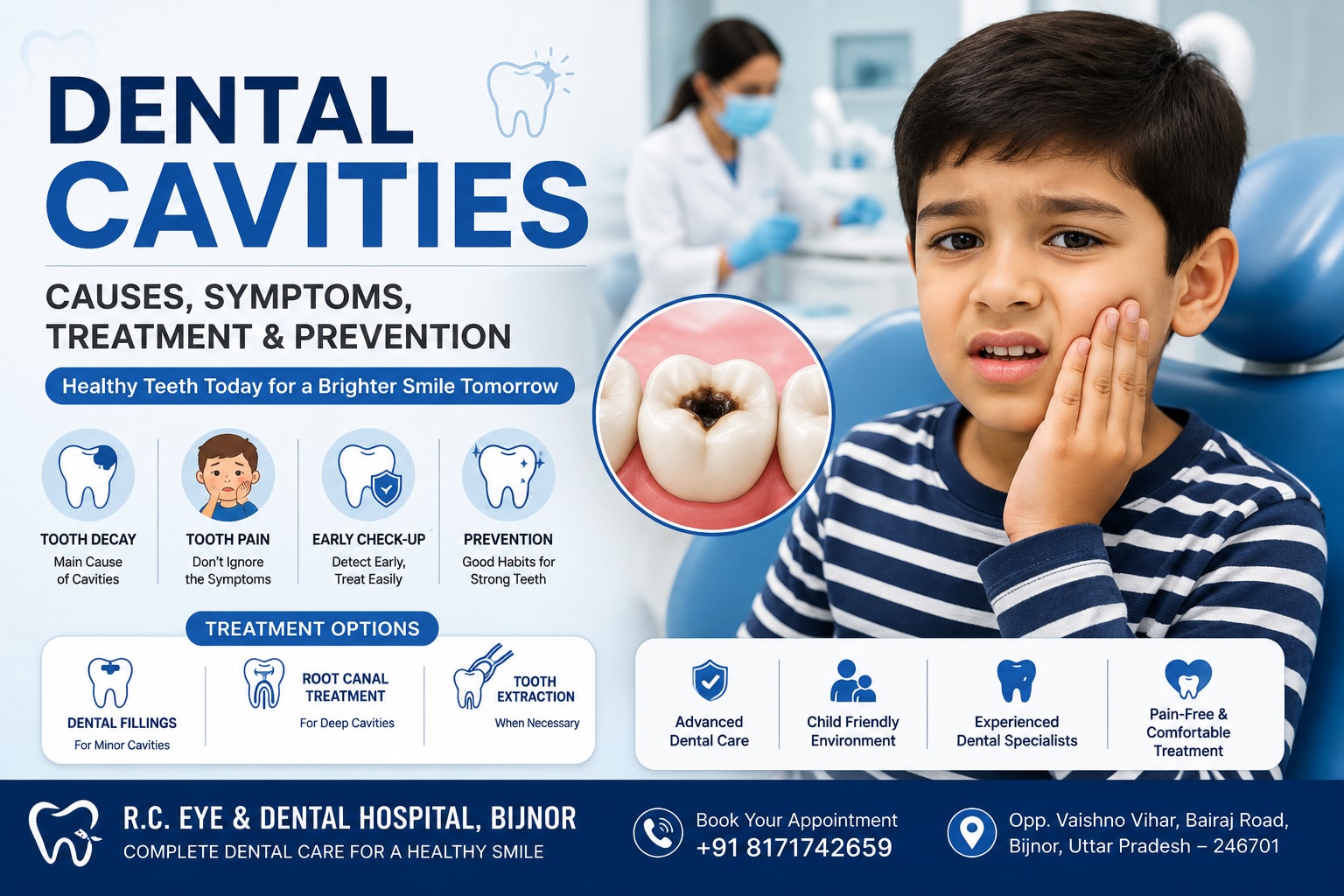
Dental Cavities Treatment in Bijnor: Causes, Symptoms & Prevention
A cavity may begin as a small spot on a tooth, but untreated tooth decay can gradually lead to sensitivity, tooth pain, infection and more extensive dental treatment. Understanding the early signs of cavities and getting timely dental care can help protect your teeth and maintain good oral health.
Dental cavities, also known as tooth decay, are among the most common oral health problems. They can affect children, teenagers and adults and may develop even when there is no obvious pain in the beginning.
If you are experiencing tooth sensitivity, pain while eating or drinking, or notice a dark spot or hole in a tooth, consulting a dentist can help identify the problem early. For those looking for dental cavity treatment in Bijnor, a professional dental examination can determine the severity of the cavity and the appropriate treatment.
At R.C. Eye & Dental Hospital, Bijnor, dental services include preventive check-ups, fillings and restorations, gum care, root canal treatment, extractions and cosmetic dentistry. (R.C. Eye & Dental Hospital)
What Are Dental Cavities?
A dental cavity is a damaged area that develops on the surface of a tooth as a result of tooth decay.
Bacteria naturally present in the mouth can combine with sugars and carbohydrates from food to produce acids. Over time, these acids can weaken and damage the tooth's protective outer layer.
If the decay continues to progress, it can move deeper into the tooth and eventually cause sensitivity or pain.
In the early stages, cavities may not produce noticeable symptoms, which is one reason regular dental check-ups are important.
What Causes Tooth Cavities?
Several factors can contribute to the development of cavities.
Poor Oral Hygiene
Not brushing and cleaning between the teeth regularly can allow plaque and bacteria to accumulate on the teeth.
Frequent Sugary Foods and Drinks
Frequent consumption of sweets, sugary drinks, and other foods containing fermentable carbohydrates can increase exposure of teeth to acids produced by oral bacteria.
Plaque Build-Up
Plaque is a sticky film that develops on teeth. When plaque is not removed properly, it can contribute to tooth decay and gum problems.
Dry Mouth
Saliva helps protect teeth by washing away food particles and helping neutralize acids. Reduced saliva production may increase the risk of cavities.
Irregular Dental Check-Ups
Some dental problems can develop without causing significant symptoms. Regular dental examinations can help identify cavities and other oral health problems earlier.
Common Symptoms of Dental Cavities
A cavity may initially develop without pain. As tooth decay progresses, however, symptoms can become more noticeable.
Common signs include:
- Tooth sensitivity
- Toothache
- Pain when eating or drinking something hot, cold or sweet
- Pain while biting or chewing
- A visible hole in the tooth
- Dark or white spots on the tooth
- Food repeatedly getting stuck around a particular tooth
- Increased sensitivity
- Persistent discomfort in the affected area
If you notice any of these symptoms, don't wait for the pain to become severe. A dental examination can help determine whether a cavity or another dental problem is responsible.
Why Do Cavities Cause Tooth Pain?
Tooth decay generally starts in the outer layers of the tooth. As the decay progresses deeper, it can reach areas containing microscopic pathways connected to the more sensitive inner part of the tooth.
This can cause sensitivity or pain, particularly when eating or drinking hot, cold or sweet foods.
If the decay progresses further, the inner tissues of the tooth may become affected, potentially requiring more extensive treatment.
This is why early cavity treatment can often help prevent a relatively small dental problem from becoming more complicated.
Different Stages of Tooth Decay
Understanding how cavities progress can help explain why early treatment matters.
1. Early Enamel Changes
The earliest signs of tooth decay may appear as changes in the tooth surface. At this stage, there may be little or no discomfort.
2. Enamel Cavity
As the decay progresses, the enamel may develop a cavity or hole.
3. Dentin Damage
When decay reaches the dentin beneath the enamel, sensitivity may become more noticeable.
4. Deeper Tooth Damage
If decay continues untreated, it can reach the deeper tissues of the tooth and may cause significant pain or infection.
At advanced stages, a simple filling may not be sufficient, and the dentist may recommend additional treatment depending on the condition of the tooth.
How Are Dental Cavities Treated?
The appropriate treatment depends on the size, depth and location of the cavity, as well as the overall condition of the tooth.
Dental Fillings
For cavities that have not progressed extensively, a dentist may remove the decayed portion of the tooth and restore it using an appropriate filling material.
R.C. Eye & Dental Hospital provides dental fillings and restorations as part of its dental care services.
You can explore the hospital's dental care services to learn more about its dental treatment options.
Root Canal Treatment
When tooth decay progresses deep enough to affect the inner tissues of the tooth, root canal treatment may be recommended.
If you want to understand this treatment in more detail, you can also read the hospital's existing Root Canal Treatment article.
Tooth Extraction
In some cases, a tooth may be severely damaged and cannot be restored. Depending on the clinical condition, a dentist may recommend extraction.
The appropriate treatment should always be decided after a proper dental examination.
Can Dental Cavities Be Prevented?
Many cavities can be prevented by maintaining good oral hygiene and following healthy dental habits.
Brush Twice a Day
Brush your teeth twice a day with fluoride toothpaste unless your dentist recommends a different approach.
Clean Between Your Teeth
Flossing or using an appropriate interdental cleaning method can help remove plaque and food particles from areas that a toothbrush may not reach effectively.
Limit Frequent Sugary Snacks
Try to reduce frequent consumption of sweets and sugary drinks. Frequent exposure to sugar can contribute to acid production by oral bacteria.
Drink Water
Drinking water can help rinse the mouth and support normal saliva function.
Don't Ignore Tooth Sensitivity
Persistent sensitivity can be a sign of an underlying dental problem. Getting it checked early may help prevent further progression.
Schedule Regular Dental Check-Ups
Regular dental examinations can help identify cavities, gum problems and other oral health conditions before they become more complicated.
When Should You Visit a Dentist?
You should consider consulting a dentist if you experience:
- Persistent tooth pain
- Sensitivity to hot or cold foods
- Pain while chewing
- Visible holes or dark spots on your teeth
- Swollen or bleeding gums
- Persistent bad breath
- A broken or damaged tooth
- Food repeatedly getting stuck around one tooth
If you are searching for a dentist in Bijnor, you can explore the dental specialists at R.C. Eye & Dental Hospital.
Dental Care at R.C. Eye & Dental Hospital, Bijnor
Choosing the right dental-care provider is important when you are dealing with cavities, tooth pain or other oral health concerns.
R.C. Eye & Dental Hospital, Bijnor provides dental care covering preventive check-ups, fillings and restorations, gum care, extractions, root canal treatment and cosmetic dentistry.
The hospital's dental team includes Dr. Surbhi R. Agarwal, Senior Dentist, whose listed areas of dental care include root canal treatment, whitening, cosmetic dentistry, gum care, extractions and restorations.
Patients can discuss their symptoms with the dental team and receive treatment recommendations based on their individual oral health and dental examination.
Can a Cavity Heal on Its Own?
An established cavity generally cannot be reversed simply through brushing or home remedies.
Very early tooth-surface changes may sometimes be managed with preventive dental care, depending on their nature and severity. However, once a definite cavity has formed, professional evaluation is important.
Avoid trying to repair a cavity using home remedies. A dentist can determine the extent of decay and recommend the appropriate treatment, such as preventive care, a filling or more extensive treatment.
What Happens If You Ignore a Cavity?
Ignoring a cavity can allow tooth decay to progress deeper.
Depending on its severity, untreated decay may result in:
- Increasing tooth sensitivity
- Persistent toothache
- Difficulty chewing
- Damage to deeper tooth structures
- Infection
- Need for root canal treatment
- Possible tooth extraction in severely damaged teeth
Getting a dental examination when symptoms first appear can help identify the problem before it becomes more complicated.
Frequently Asked Questions About Dental Cavities
Can cavities cause tooth pain?
Yes. Cavities may initially be painless, but as decay progresses deeper into the tooth, it can cause sensitivity and toothache.
Can cavities be treated without a filling?
Treatment depends on the stage of tooth decay. An established cavity may require a filling or another dental procedure. A dentist should examine the tooth before deciding on treatment.
Can a cavity lead to root canal treatment?
Yes. If tooth decay progresses deep enough to affect the inner tissues of the tooth, root canal treatment may become necessary.
How often should I visit a dentist?
Regular dental examinations can help identify cavities and other oral health problems early. Your dentist can recommend an appropriate check-up schedule based on your oral health.
What should I do if I have severe tooth pain?
Persistent or severe tooth pain should be evaluated by a dentist. The pain could be related to a cavity, infection, gum problem or another dental condition.
Where can I get dental cavities treatment in Bijnor?
If you are looking for dental cavities treatment in Bijnor, you can consult the dental team at R.C. Eye & Dental Hospital for an examination and personalized treatment guidance.
Don't Ignore Tooth Pain or Cavities
A small cavity may not seem serious, especially when there is little or no pain. However, untreated tooth decay can gradually become more complicated and may eventually affect deeper parts of the tooth.
Maintaining good oral hygiene, limiting frequent sugary foods and drinks, having regular dental examinations and seeking professional advice when symptoms appear can help protect your teeth.
If you are experiencing tooth pain, sensitivity or signs of a cavity, consider getting a dental examination instead of waiting for the problem to become severe.
For patients looking for dental care in Bijnor, R.C. Eye & Dental Hospital provides preventive and restorative dental services with an experienced dental-care team.
Book Your Dental Consultation
R.C. Eye & Dental Hospital, Bijnor
Opp. Vaishno Vihar, Bairaj Road, Bijnor, Uttar Pradesh – 246701
For Appointment & Consultation:
+91 8171742659
Book your consultation and take the first step towards healthier teeth and gums.
Need Expert Consultation?
Our specialists are here to help you with any eye or dental concern.