
Dental Abscess: Symptoms, Causes & Treatment
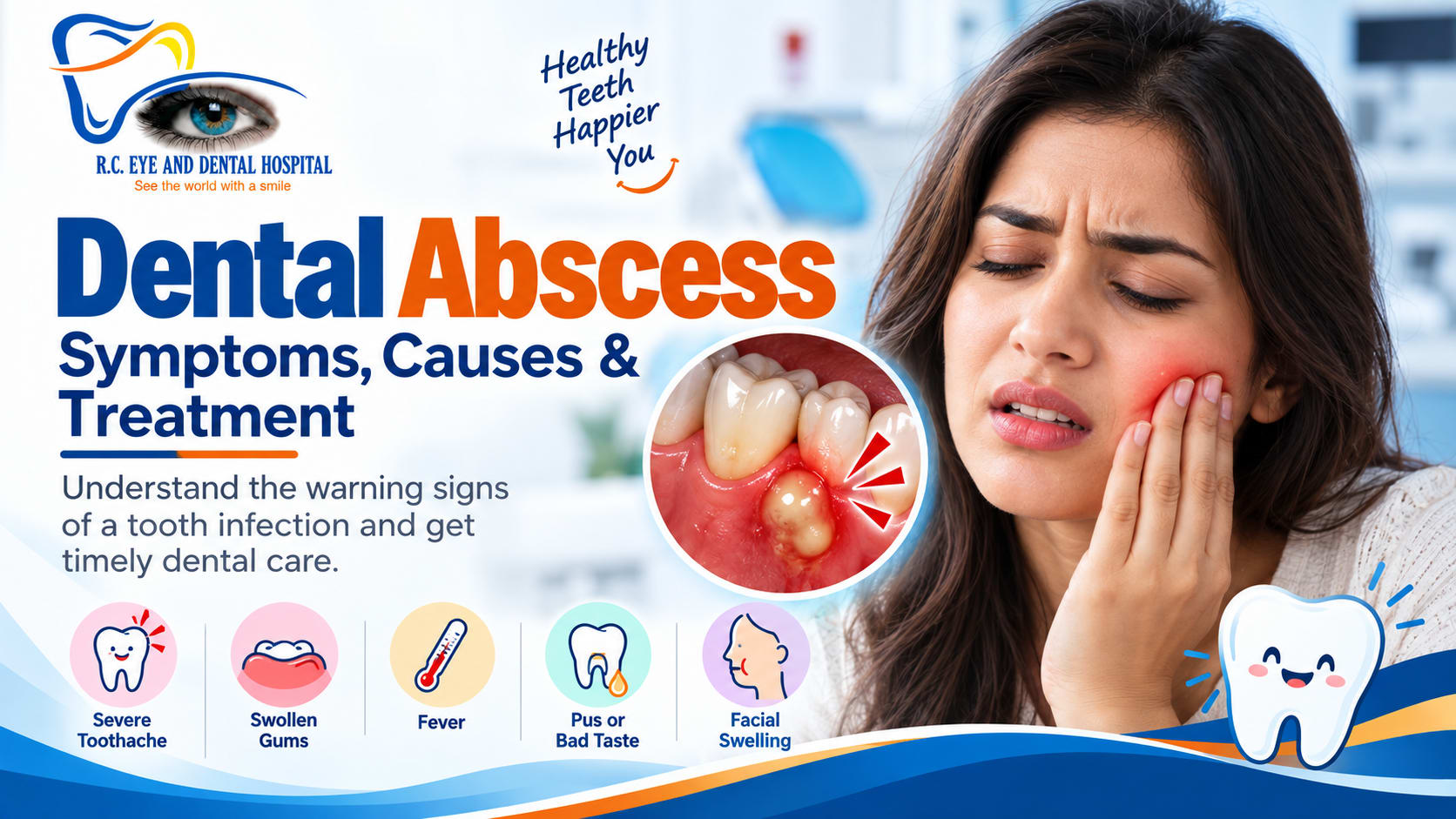
Dental Abscess: Symptoms, Causes & Treatment
Dr. Surbhi Agarwal
30 September 2026
What Is a Dental Abscess?
A dental abscess is a collection of pus caused by a bacterial infection in or around a tooth. It can develop when bacteria enter the tooth through decay, cracks or damage and reach deeper tissues.
A dental abscess can cause significant pain and should not be ignored, as the infection may spread to surrounding tissues.
Common Symptoms of a Dental Abscess
A dental abscess may cause:
- Severe or persistent toothache
- Swelling in the gum or face
- Sensitivity to hot and cold
- Pain while chewing or biting
- Bad taste or pus in the mouth
- Red or swollen gums
- Fever or feeling unwell
- Difficulty opening the mouth in some cases
If you experience swelling along with severe tooth pain, a dental examination is recommended.
What Causes a Dental Abscess?
A tooth infection can develop when bacteria enter the inner part of a tooth. Common contributing factors include:
- Untreated tooth decay
- Cracked or damaged teeth
- Gum disease
- Dental injuries
- Poor oral hygiene
Regular dental care can help identify problems before they develop into serious infections.
How Is a Dental Abscess Treated?
Treatment depends on the cause and severity of the infection. A dentist may recommend procedures such as:
Root Canal Treatment
If the infection has reached the inside of the tooth, root canal treatment may help remove the infected tissue and preserve the tooth.
Drainage of the Abscess
A dentist may drain the accumulated pus to help control the infection and relieve pressure.
Tooth Extraction
If a severely damaged or infected tooth cannot be saved, tooth extraction may be considered.
Antibiotics may sometimes be prescribed when clinically indicated, particularly when there are signs of spreading infection. However, antibiotics alone do not always eliminate the underlying dental problem.
Can a Dental Abscess Go Away on Its Own?
A dental abscess should not be left untreated even if the pain temporarily decreases.
A reduction in pain does not necessarily mean that the infection has been cured. Professional dental evaluation is important to determine the source of the infection and appropriate treatment.
When Should You See a Dentist?
Contact a dentist if you have persistent tooth pain, swelling, pus, fever or pain while chewing.
Seek urgent medical attention if swelling makes it difficult to breathe, swallow or open your mouth, as these can be signs of a potentially serious spreading infection.
Dental Care at R.C. Eye & Dental Hospital, Bijnor
At R.C. Eye & Dental Hospital, Bijnor, patients can consult the dental team for tooth pain, infections, swelling and other dental concerns.
Do not ignore persistent tooth pain or swelling. Early dental evaluation can help identify the cause of infection and guide appropriate treatment.
Need Expert Consultation?
Our specialists are here to help you with any eye or dental concern.