
Cataract Surgery in Bijnor: A Complete Guide to Treatment & Recovery
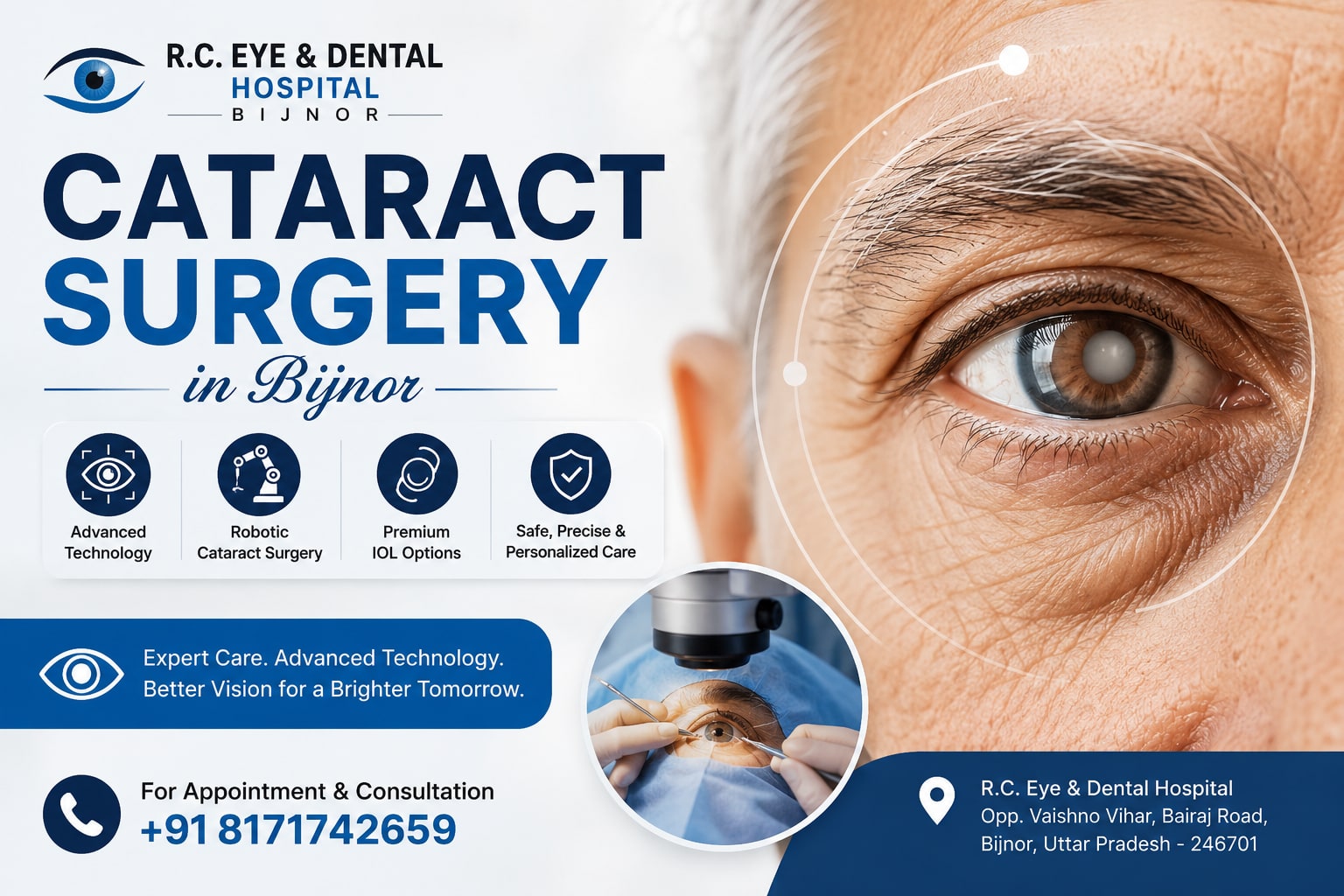
Cataract Surgery in Bijnor: A Complete Guide to Treatment & Recovery
Cataracts are one of the most common causes of vision problems, particularly with advancing age. A cataract develops when the natural lens of the eye becomes cloudy, gradually affecting the clarity of vision. What may initially seem like a minor change can eventually make reading, driving, recognizing faces, or performing everyday activities more difficult.
Fortunately, modern cataract treatment can help restore clearer vision in suitable patients. If you are looking for cataract surgery in Bijnor, understanding the symptoms, treatment options, surgical procedure, recovery and available eye-care facilities can help you make a more informed decision.
At R.C. Eye & Dental Hospital, Bijnor, patients can receive comprehensive evaluation and guidance for cataracts and other eye-related conditions. The hospital provides advanced cataract treatment options, including robotic phacoemulsification and different intraocular lens options.
https://rceyebijnor.com/services/cataract-surgeryWhat Is a Cataract?
A cataract occurs when the normally clear natural lens inside the eye becomes cloudy. The lens helps focus light onto the retina, allowing the brain to create a clear image.
When the lens becomes cloudy, light does not pass through it properly. As a result, vision may gradually become blurred, hazy or less sharp.
Cataracts commonly develop with age, but they can also be associated with factors such as:
- Eye injuries
- Certain medical conditions
- Long-term use of some medications
- Excessive exposure to ultraviolet radiation
- Previous eye surgery
- Other eye-related conditions
Because cataracts generally develop gradually, many people may not recognize the changes in their vision initially.
Common Symptoms of Cataract
Cataract symptoms can vary from person to person. Some common signs include:
- Blurred or cloudy vision
- Difficulty seeing in low light
- Increased sensitivity to bright lights
- Glare or halos around lights
- Difficulty driving at night
- Faded or less vibrant colours
- Frequent changes in eyeglass prescription
- Difficulty reading
- Difficulty recognizing faces clearly
- Double vision in one eye
If these symptoms begin affecting your daily activities, consulting an eye specialist in Bijnor for a comprehensive eye examination can help identify the cause of your vision problems.
When Do You Need Cataract Surgery?
A cataract does not always require immediate surgery. During the early stages, an updated eyeglass prescription, improved lighting or other measures may help manage some vision difficulties.
However, when cataracts begin interfering with your everyday life, your ophthalmologist may recommend surgery.
You may need to discuss cataract surgery if you are experiencing difficulty with:
- Reading
- Driving
- Working
- Watching television
- Recognizing faces
- Performing routine activities
- Moving around safely
The decision to undergo surgery is not based solely on age. Your symptoms, visual requirements, eye health and examination findings are important factors when determining whether cataract surgery is appropriate.
What Happens During Cataract Surgery?
Cataract surgery involves removing the cloudy natural lens of the eye and replacing it with an artificial intraocular lens (IOL).
Before surgery, the eye is carefully examined and measurements are taken to help determine the most appropriate lens option.
During the procedure, the cloudy lens is removed using a specialized surgical technique, after which an artificial lens is placed inside the eye.
Modern cataract surgery is designed to provide precise treatment with minimal discomfort. However, the exact procedure and recovery experience can vary depending on the patient's eye condition and the treatment approach recommended by the ophthalmologist.
If you want to understand the procedure and treatment options offered by the hospital, you can explore the cataract surgery services at R.C. Eye & Dental Hospital.
What Is Robotic Cataract Surgery?
Advancements in ophthalmology have introduced sophisticated technologies that can assist surgeons during selected stages of cataract procedures.
Robotic-assisted cataract surgery may use computer-guided technology to support precision during certain parts of the procedure. Whether this approach is appropriate depends on the patient's eye condition, examination findings and the surgeon's clinical assessment.
R.C. Eye & Dental Hospital, Bijnor offers robotic phacoemulsification as part of its cataract treatment services. Patients can discuss the available options with the eye-care team and understand which procedure may be suitable for their individual needs.
It is important to remember that treatment should always be selected after a proper eye examination rather than based only on the technology used.
What Are Intraocular Lenses (IOLs)?
During cataract surgery, the cloudy natural lens is replaced with an artificial intraocular lens.
Different types of IOLs may be considered depending on the patient's visual requirements and eye condition.
These can include:
- Monofocal IOLs
- Multifocal IOLs
- Trifocal IOLs
The most suitable IOL depends on several factors, including your eye health, lifestyle, visual requirements and the recommendation of your ophthalmologist.
A detailed examination and discussion with your eye specialist can help you understand the advantages and limitations of the available lens options.
Is Cataract Surgery Painful?
Modern cataract surgery is designed to minimize discomfort, and the type of anaesthesia used depends on the procedure and the patient's individual requirements.
At R.C. Eye & Dental Hospital, cataract surgery is offered with a focus on patient comfort and precision. Patients should discuss any concerns regarding anaesthesia, discomfort and the surgical process with their ophthalmologist before treatment.
How Should You Prepare for Cataract Surgery?
Your ophthalmologist will provide specific instructions according to your individual condition.
Preparation may include:
- Undergoing a detailed eye examination.
- Measuring the eye for intraocular lens selection.
- Informing your doctor about existing medical conditions.
- Providing information about medicines you are taking.
- Following instructions regarding prescribed eye drops or medicines.
- Arranging transportation if required.
- Following all pre-operative instructions provided by your medical team.
Do not stop or change any prescribed medication unless your doctor specifically advises you to do so.
Cataract Surgery Recovery: What to Expect
Recovery after cataract surgery varies from person to person. Many patients experience improvement in vision as the eye begins to heal, although complete recovery can take longer.
After surgery, your doctor may recommend:
- Using prescribed eye drops as directed
- Avoiding rubbing or pressing the eye
- Protecting the operated eye as advised
- Attending scheduled follow-up appointments
- Avoiding strenuous activities until permitted
- Following all post-operative instructions carefully
If you experience significant pain, sudden vision changes, increasing redness, unusual discharge, flashes of light or a sudden increase in floaters, contact your eye-care professional promptly.
Your recovery instructions may vary depending on your individual eye condition and the procedure performed.
Why Choose an Eye Hospital in Bijnor for Cataract Treatment?
Choosing the right eye hospital in Bijnor is an important part of your cataract treatment journey.
When evaluating an eye hospital, consider factors such as:
- Experience and qualifications of the ophthalmologist
- Availability of modern diagnostic equipment
- Cataract treatment options
- Surgical facilities
- Pre-operative evaluation
- Post-operative care
- Follow-up support
- Clear communication about treatment options
Cataract Care at R.C. Eye & Dental Hospital
R.C. Eye & Dental Hospital, Bijnor provides specialized eye-care services for cataracts and other vision-related conditions.
The hospital focuses on comprehensive evaluation, modern diagnostic facilities and individualized treatment planning. Its cataract services include advanced treatment options such as robotic phacoemulsification and different IOL choices.
The hospital also provides care related to conditions such as glaucoma, retina disorders, corneal problems and pediatric eye conditions.
Patients considering cataract surgery can consult the hospital's eye-care team to understand their condition and determine whether treatment is currently required.
Experienced Eye Care at R.C. Eye & Dental Hospital
Selecting an experienced eye-care professional is an important part of any cataract treatment journey.
You can explore the hospital's doctors and eye-care specialists to learn more about the medical team and their areas of expertise.
The hospital's specialist team includes Dr. Rachit Agarwal, who is associated with eye surgery and cornea and refractive surgery. Patients can discuss their vision concerns, undergo an appropriate examination and receive treatment recommendations based on their individual condition.
Rather than choosing a treatment simply because it is advertised as advanced, patients should undergo a proper examination and discuss the benefits, limitations and suitability of each treatment option with their ophthalmologist.
Why Are Regular Eye Checkups Important?
Cataracts are not the only condition that can affect vision. Several eye diseases may develop with few noticeable symptoms during their early stages.
Regular eye examinations can help identify conditions such as:
- Cataracts
- Glaucoma
- Retinal disorders
- Corneal conditions
- Refractive errors
- Other vision-related problems
Regular eye checkups can be particularly useful for older adults and people with risk factors for eye disease.
If you notice a persistent change in your vision, consulting an eye doctor in Bijnor can help determine the underlying cause.
For more useful information about eye health, treatment and common eye conditions, you can also explore the R.C. Eye & Dental Hospital blog.
When Should You Visit an Eye Specialist?
You should consider scheduling an eye examination if you experience:
- Persistent blurred vision
- Difficulty seeing at night
- Increased glare from lights
- Frequent changes in glasses
- Difficulty reading
- Reduced ability to recognize faces
- Gradual or sudden changes in vision
- Difficulty performing normal daily activities
Early evaluation can help determine whether cataracts or another eye condition is responsible for your symptoms.
If you are searching for an eye specialist in Bijnor, a comprehensive examination can help identify the appropriate treatment or management approach for your individual eye health.
Frequently Asked Questions About Cataract Surgery
1. What is the main treatment for cataracts?
When cataracts significantly affect vision and daily activities, surgery to remove the cloudy lens and replace it with an intraocular lens is the standard definitive treatment.
2. Can cataracts be treated without surgery?
In the early stages, glasses and improved lighting may help manage some vision difficulties. However, these measures do not remove an established cataract. When the cataract significantly affects vision, your ophthalmologist may recommend surgery.
3. Is cataract surgery painful?
Cataract surgery is generally performed with anaesthesia to minimize discomfort. Your ophthalmologist will explain the anaesthesia and procedure before surgery.
4. How long does cataract surgery recovery take?
Recovery varies from person to person. Vision may improve relatively quickly, but the eye can continue healing for several weeks. Following your doctor's instructions and attending follow-up appointments are important.
5. Can cataracts come back after surgery?
A cataract itself does not grow back after the cloudy natural lens has been removed. However, some patients may develop posterior capsule opacification (PCO), which can cause vision to become cloudy again and may be treated with a laser procedure.
6. How do I know if I need cataract surgery?
An ophthalmologist can determine whether surgery is appropriate after examining your eyes and understanding how cataracts are affecting your daily activities and quality of life.
7. Is robotic cataract surgery suitable for everyone?
Not necessarily. The appropriate treatment depends on the patient's eye condition, examination findings and individual requirements. Your ophthalmologist can explain whether robotic-assisted cataract surgery is suitable for you.
8. Where can I get cataract treatment in Bijnor?
If you are looking for cataract treatment in Bijnor, you can consult the eye-care team at R.C. Eye & Dental Hospital, Bijnor for an eye examination and personalized treatment guidance.
Take the Next Step Towards Better Vision
Cataracts can gradually affect your vision and make everyday activities more difficult. Timely evaluation can help you understand the cause of your vision problems and the treatment options available.
If you are experiencing blurred vision, glare, difficulty seeing at night or other cataract-related symptoms, consider scheduling a comprehensive eye examination.
For patients looking for cataract surgery in Bijnor, R.C. Eye & Dental Hospital provides specialized eye-care services and advanced cataract treatment options based on individual patient needs.
Book Your Consultation
R.C. Eye & Dental Hospital, Bijnor
Opp. Vaishno Vihar, Bairaj Road, Bijnor, Uttar Pradesh – 246701
For Appointment & Consultation:
+91 8171742659
Book an appointment and discuss your cataract treatment options with the R.C. Eye & Dental Hospital team.
Need Expert Consultation?
Our specialists are here to help you with any eye or dental concern.